Dino Cataclysm: Survival
- 3.4
- Rating
- 100.00K
- Installs
- Free
- Price

 Analysis by App-foxy
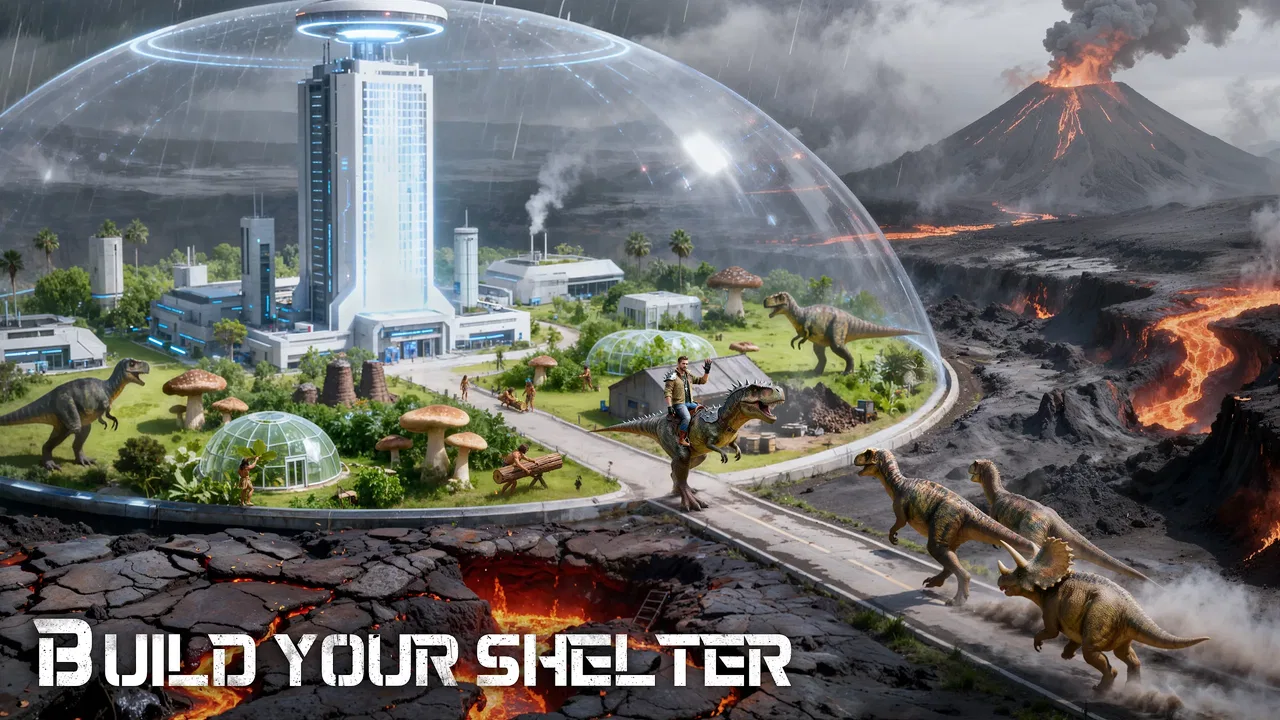
I went into Dino Cataclysm: Survival expecting a straightforward dinosaur survival game, but its appeal is more specific than that. This is a strategy game from Phantix Games where the central idea is preparing a high-tech base while a volcanic disaster threatens the world around it. The premise gives the game an immediate practical question: what should I improve first when every decision is connected to staying alive?
That question is also where the experience can become confusing. The game is free to start, but it includes in-app purchases ranging from $0.99 to $99.99 per item. Its Teen content rating suggests that it is aimed at older players rather than very young children. I would describe it as a better fit for someone who enjoys planning under pressure than for a player looking for a relaxed dinosaur collection game.
At the time of my review, the Android release was version 0.0.325 and required Android 6.0 or later. The game has passed 100K installs, while its average rating sits at 3.4 from 61 ratings and 6 written reviews. Those numbers point to a game with a real player base but also an uneven first impression, so I paid particular attention to the moments where a new player may lose momentum.
You May Also Like

 Pandora - Music & Podcasts
Pandora’s Music Is Easy to Start, but Harder to Recover
Pandora’s strength is its low-effort path from a seed to a station. Its weak spot is how much confidence it asks you to place in connection, setup, and quiet recovery.

 8 Ball Pool
 Is Built on Rivalries, Rematches, and Routine
A close look at the rivalries, rematches, shared routines, and unanswered safety questions that turn a quick pool match into a persistent mobile community.

 Samsung Music
’s Quiet Strength Is Playing What You Already Own
Its reach comes less from spectacle than from dependable access to a personal library. That simplicity is both the app’s strongest retention engine and its ceiling.

 AccuWeather: Weather Radar
AccuWeather Review: A Quick, Clear Forecast for Everyday Decisions
For everyday plans, the best forecast is the one you can understand quickly. AccuWeather makes rain timing, radar, and local conditions easy to act on, with a few trade-offs.

 Hill Climb Racing
Why Hill Climb Racing Still Turns Crashes Into One More Run
A tiny car, a bumpy hill and one more upgrade: Hill Climb Racing keeps resurfacing because its simple chaos makes every near-miss feel personal.

 AliExpress - Shopping App
AliExpress Makes Global Shopping Feel Personal, but Shoppers Bear the Risk
AliExpress turns a global marketplace into a pocket-sized discovery engine. Its reach is useful, its shopping loop compelling, and its trade-offs easy to miss.
More From Our News Desk
View All News


Getting into the base without losing the thread
The opening minutes are important because a survival strategy game has to teach priorities clearly. In this one, I found it useful to treat the first session as an orientation rather than a race. The goal is not simply to tap every available action. It is to understand which improvements keep the base functioning and which ones can wait until the immediate danger is under control.
That sounds obvious, but disaster-themed games often encourage quick reactions. A new player may spend resources on whatever button is most visible, then discover that a more basic requirement is holding back progress. My advice is to pause after each early upgrade and check what it actually changes. If it improves the base’s ability to support future actions, it deserves priority over an attractive but less urgent enhancement.
The dinosaur theme can also create the wrong expectation. This is not best approached as a simple creature-raising game. The dinosaurs are part of a broader survival situation, and the high-tech shelter gives the strategy its identity. I enjoyed it more once I stopped waiting for the game to behave like a traditional dinosaur adventure and focused on the relationship between preparation, limited resources, and environmental danger.
Where new players are most likely to get stuck
The first common sticking point is unclear prioritization. When several actions are available, I recommend choosing the one that removes a current bottleneck rather than the one that looks most rewarding. If progress stops, look for the requirement that is preventing the next meaningful step. This simple habit is more useful than upgrading randomly, especially during the opening stretch.
A second source of friction is assuming that every delay is a gameplay problem. A strategy game may intentionally slow progress while it waits for a resource, an upgrade, or a prerequisite. Before closing the app or spending money, I would inspect the current objective and the base’s available actions again. The important distinction is whether the game is asking for a deliberate choice or whether the interface has genuinely failed to respond.
The third issue is resource anxiety. Because the setting is built around catastrophe, it is tempting to behave as if every resource must be spent immediately. I found the opposite approach safer: keep a small reserve whenever possible. A reserve gives me room to react when the next objective changes, and it reduces the chance that one impulsive purchase leaves the base unable to continue.
My most useful early rule is simple: solve the current bottleneck before chasing the next reward. That rule is not flashy, but it prevents a surprising amount of wasted effort. It also makes the game feel more strategic because each action has a reason instead of becoming a sequence of disconnected taps.
Setup checks before blaming the game
Before settling into a longer session, I would check the basics. The device needs Android 6.0 or later, and the game should be installed from a reliable source. If the app opens and then behaves strangely, I would first restart it, make sure the device has enough free storage for normal operation, and close other demanding apps running in the background.
These are ordinary checks, but they matter more in a strategy game than they might seem. A disrupted session can make it difficult to tell whether a decision failed or whether the app simply did not finish registering an action. I prefer to wait briefly after a major action and confirm that the visible state has changed before tapping repeatedly.
Connection quality is another practical consideration whenever an app needs to verify progress or load new content. I would test the game on a stable connection before concluding that a missing response is a permanent problem. Switching between unreliable mobile coverage and Wi-Fi during an action can create confusing results, particularly if the game returns to a previous screen.
I would also avoid clearing app data casually. Restarting the app is a low-risk first step; deleting local data can have consequences for progress if the game does not restore everything automatically. If a problem appears after an interruption, reopening the game and checking the visible base state is safer than immediately reinstalling it.
The purchase system deserves a setup check of its own. Dino Cataclysm: Survival is free, but optional items can cost from $0.99 up to $99.99. I would enable purchase confirmation on the device and avoid treating a paid item as a troubleshooting tool. Spending money may speed up a decision, but it cannot reliably fix a frozen interface, a connection problem, or a misunderstood objective.
A recovery routine when progress seems lost
When an action appears not to have worked, my recovery routine is deliberately conservative. First, I stop tapping. Repeated taps can make it harder to know which action was accepted. Next, I wait a moment, inspect the base and current objective, and then close and reopen the app if the screen still looks unchanged.
If the game returns to an earlier-looking state, I would compare the available resources and completed actions rather than relying only on memory. In a survival strategy game, a small change can be easy to miss. This check helps separate a genuine rollback from an interface that simply did not highlight the result clearly.
After reopening, I would repeat the last action only if the game clearly shows that it was not completed. I would not immediately purchase the same item again or spend resources a second time. That is especially important in a free-to-play game, where uncertainty can turn a minor display issue into an unnecessary charge or a wasted upgrade.
Another useful habit is to make one meaningful change at a time. If I upgrade several parts of the base in quick succession and something goes wrong, I cannot easily identify the cause. A slower workflow makes recovery easier: complete one action, confirm the result, then move to the next. It may feel less efficient, but it protects both resources and patience.
If the problem continues after a restart and a stable connection, I would record exactly what happened: the screen shown, the action selected, and whether the resource or upgrade changed. That information is much more useful when seeking support than a general statement that the game is broken. I would also avoid repeatedly reinstalling unless I had considered the risk to local progress.
When the app may not be the cause
Not every frustrating session points to a defect in the game. An older device that technically meets the operating-system requirement may still struggle with background memory pressure. If the app becomes unstable only after many other apps have been open, I would restart the device and try again with fewer processes running.
Storage can create similar confusion. A device with very little free space may allow an app to open while making updates, caching, or normal saving less reliable. Checking available space is a sensible step before blaming the game, particularly if other apps are also behaving unusually.
Network changes can produce inconsistent results too. If progress appears different between two sessions, I would first reproduce the issue on one stable connection. Moving between networks makes diagnosis difficult because the problem may be temporary communication rather than a strategy decision or a permanent loss of progress.
There is also a human cause: misreading the next requirement. I have caught myself assuming that a visible upgrade was the intended next move when the game was actually waiting for a different condition. Before calling the experience unfair, I would inspect the objective again and ask whether I am trying to advance the base in the order the game expects.
This is where the game benefits from a patient playing style. Players who enjoy experimenting can recover from a mistaken choice by learning the pattern. Players who want every instruction to be explicit may feel more friction, especially if they prefer games that present a clear checklist and explain the result of every action immediately.
How it compares with familiar strategy alternatives
Compared with a conventional city-building game, Dino Cataclysm: Survival has a stronger emergency focus. A normal builder often lets me expand at my own pace, while this game’s volcanic setting makes preparation feel more urgent. That atmosphere is its main advantage, but it also means that players seeking calm decoration and unrestricted planning may prefer a less disaster-driven alternative.
Compared with a typical dinosaur game, the emphasis here is not simply on discovering, collecting, or observing creatures. The base and its technology are the practical center of the experience. I would choose this game over a creature-focused title if I wanted decisions about survival infrastructure, but I would choose the other type if my priority were direct interaction with dinosaurs.
It also differs from a purely competitive strategy game. The appeal is less about proving dominance over other players and more about managing a threatening situation. That makes it approachable for someone who likes strategic pressure without wanting a constant competitive contest. On the other hand, players who need deep opponent-driven tactics may find the survival framing less satisfying than a dedicated competitive strategy title.
The free entry point makes it easy to test that distinction for myself. I would play long enough to understand the basic rhythm before considering any purchase. Since the item range extends to $99.99, the sensible comparison is not only about genre but also about spending comfort. Someone who wants a fully predictable one-time purchase may be better served by a premium strategy game without optional item pricing.
Who will enjoy the volcanic survival premise
I think the game is best for players who like making small decisions with consequences. It suits someone who enjoys checking requirements, preserving resources, and building toward a safer position rather than rushing through a linear story. The dinosaur setting adds personality, while the high-tech base gives the player a concrete reason to think about upgrades.
A realistic everyday use case would be a short evening session after work or school. I would open the game, review the base, identify one immediate bottleneck, complete a single improvement, and stop after confirming that progress was saved or visibly registered. That approach keeps the game manageable and avoids turning a brief break into an unplanned spending session.
It is less suitable for a player who wants instant action, a fully explained tutorial, or a game that can be played without thinking about resource order. I would also hesitate to recommend it to younger children because of the Teen rating and the presence of in-app purchases. For families, purchase controls and supervision are sensible before handing over the device.
Players with limited patience for early friction should try the free version carefully rather than relying on the premise alone. The concept is appealing, but the experience depends on whether the player enjoys working out priorities. If the first session feels like administrative work instead of meaningful planning, another strategy game with more transparent guidance may be a better match.
My practical verdict after testing the experience
Dino Cataclysm: Survival has a clear identity: it combines dinosaur survival with the pressure of protecting a technologically advanced base from volcanic catastrophe. I like that the setting gives ordinary upgrade decisions a reason to exist. The game becomes most engaging when I treat each improvement as part of a survival plan rather than as an isolated reward.
Its weaknesses are mainly about friction. New players need to be deliberate when reading objectives, confirming actions, and managing resources. The free-to-play structure also means I would keep spending controls in place and never use a purchase to solve a problem that may actually be caused by a connection, storage, or interface issue.
With an average rating of 3.4 from 61 ratings, the reception is mixed rather than universally enthusiastic. That matches my view: the idea is promising, but the game asks for patience during setup and recovery. The developer, Phantix Games, has built a premise that can appeal to strategy fans, though the early experience will not suit everyone.
I would recommend trying it if you enjoy disaster planning, base-focused progression, and dinosaur themes that serve a larger survival story. I would skip it if you want a polished, frictionless experience with no optional spending or if your ideal dinosaur game is mainly about collecting and exploration. For the right player, the best way in is to play slowly, protect resources, confirm each important action, and let the survival decisions—not the purchase prompts—define the experience.
FAQs for Dino Cataclysm: Survival
01What is Dino Cataclysm: Survival about?
Dino Cataclysm: Survival is an immersive survival game where players find themselves in a prehistoric world filled with dinosaurs. The objective is to gather resources, craft tools, and build shelters to survive against the elements and dinosaur threats. Players must strategize and manage resources effectively to thrive in this challenging environment.
02Is Dino Cataclysm: Survival available on both Android and iOS?
Yes, Dino Cataclysm: Survival is available for download on both Android and iOS platforms. Users can find the game on the Google Play Store for Android devices and the App Store for iOS devices. Ensure your device meets the minimum system requirements for optimal gameplay.
03Does Dino Cataclysm: Survival require an internet connection?
Dino Cataclysm: Survival does not require a constant internet connection for single-player mode. However, if you wish to access multiplayer features or receive the latest updates and content, an internet connection will be necessary. Check your data usage if you're playing on a mobile network.
04Are there in-app purchases in Dino Cataclysm: Survival?
Yes, Dino Cataclysm: Survival offers in-app purchases. Players can buy items and resources to enhance their gameplay experience. While these purchases can provide advantages, they are not essential to enjoying the game. Players can progress through the game without spending money by utilizing in-game resource management.
05What age group is Dino Cataclysm: Survival suitable for?
Dino Cataclysm: Survival is suitable for players aged 12 and above. The game includes elements of survival, mild violence, and strategic planning, which may be more appropriate for older children and adults. Parents should review the content and game mechanics to determine if it's appropriate for younger players.
Pros
- Engaging gameplay with dynamic challenges.
- Stunning graphics and immersive sound effects.
- Frequent updates with new content.
- Intuitive controls for easy navigation.
- Multiplayer mode enhances social interaction.
Cons
- Occasional in-app purchase prompts.
- Requires a stable internet connection.
- Limited offline features available.
- Some ads can be intrusive.
- High battery consumption during play.

Dino Cataclysm: Survival
Gallery